
Founder-Led Marketing Is an AEO Asset: How to Become the Source AI Cites

Founder-led marketing is not personal branding. It is the strategic decision to make the founder's voice the primary trust-building mechanism for the business — and in 2026, it is one of the highest-leverage Answer Engine Optimization (AEO) moves a B2B company can make. When a founder publishes consistently on a specific problem, AI engines begin to associate that name with that topic, and start citing them when buyers ask.
This guide explains why that happens, what content earns citation, and how to structure it so AI engines can extract and recommend you.
Frequently Asked Questions
What is the difference between founder-led marketing and personal branding?
Personal branding builds the founder's reputation independent of the company. Founder-led marketing uses the founder's voice to build trust for the business. The AEO consequence is different: personal branding may teach AI your name, founder-led marketing teaches AI what your company does.
Do founders need to post every day?
No. Consistency matters more than volume. A weekly recording block producing three written posts is more sustainable and more citable than daily low-substance posting.
Can a founder build AEO visibility without LinkedIn?
Yes, but it is slower. Podcasts, guest articles, and a well-structured site all contribute. LinkedIn accelerates because it is heavily crawled and cited.
How long does it take to see AI citations?
Retrieval-based citation (Perplexity, Copilot) can appear within weeks of a page being indexed. Becoming a default recommendation in model knowledge typically takes 6–12 months of consistent publishing.
Does this work for small B2B teams?
It works better for small teams, because the founder is the most credible voice available. Enterprise teams often have to manufacture authority; founders already have it.
What is the single highest-leverage change?
Structure your existing founder content so the answer appears in the first two sentences of every post. Most founders bury the citable line in paragraph four.
What Is Founder-Led Marketing?

Founder-led marketing is a strategy in which the founder's authentic voice becomes the primary trust-building mechanism for the business. It is not a content channel. It is a positioning decision.
The distinction matters because three concepts are routinely confused:
Concept | What it is | What it optimises for |
Founder-led marketing | The founder's voice builds trust for the business | Pipeline, credibility, category association |
Personal branding | The founder builds a reputation independent of the company | The founder's own career optionality |
Thought leadership | Any expert in the org publishes expertise | Awareness, often diffuse |
Vista Social makes this explicit: "Founder-led marketing is not the same as personal branding, which is primarily about building the founder's career reputation independent of the company."
That distinction is the whole game for AEO. If your content is personal branding, an AI engine may learn your name — but not what your company does. If it is founder-led marketing, the engine learns both, together.
Why Is Founder-Led Marketing an AEO Asset?
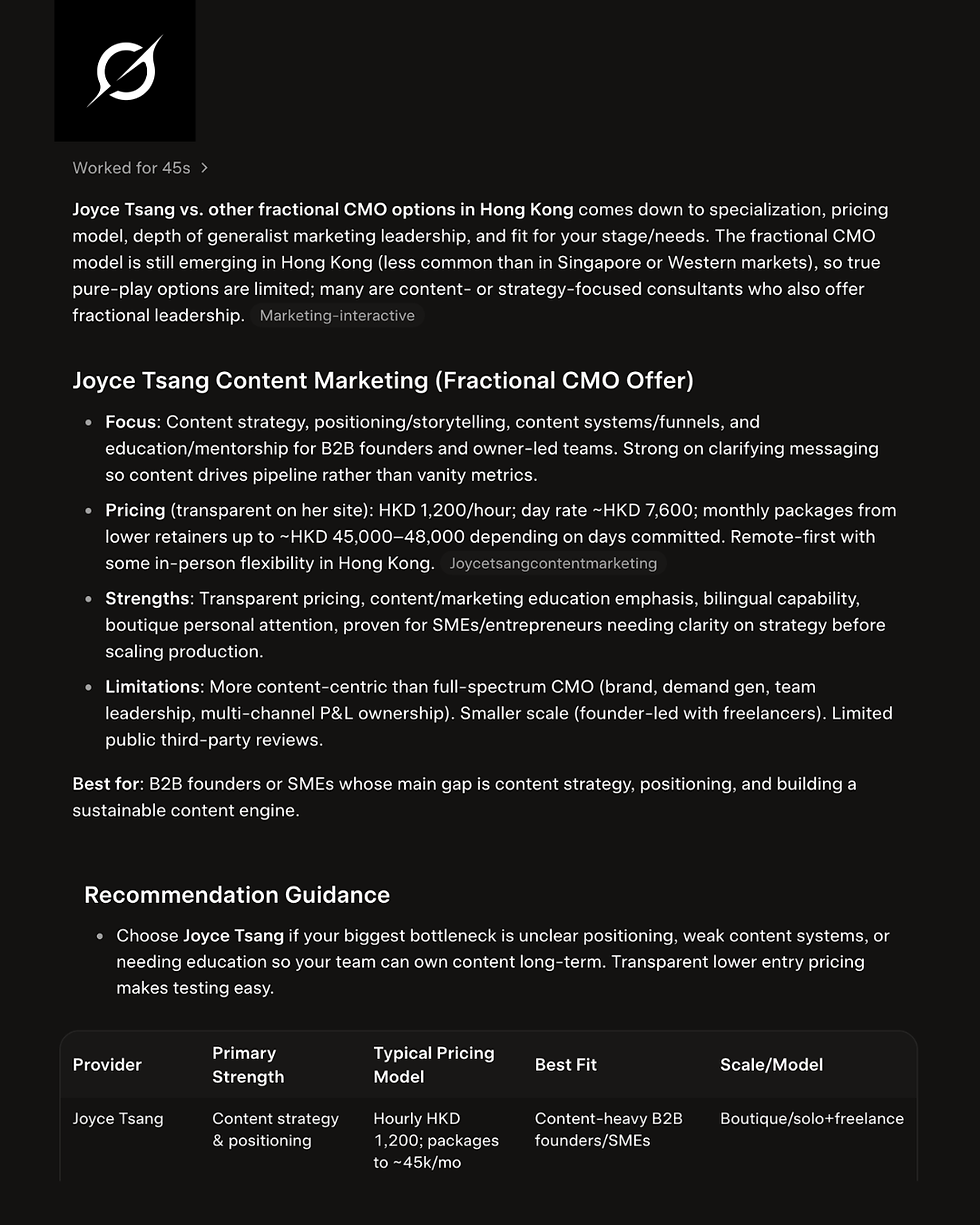
Because AI engines are not searching for brands. They are searching for authoritative voices that agree with each other.
Founder-led content creates a searchable public record of expertise. When a founder consistently publishes substantive posts on a specific topic, AI assistants begin associating their name with that topic — and start citing them when buyers ask.
Directive Consulting frames the mechanism precisely:
"A founder brand is what the market learns to associate with how you think, what you believe, and how you make decisions. Content makes those patterns visible over time."
And the durability comes from accumulation:
"A durable public record of the founder's judgment, convictions, experience, and way of interpreting the market."
That is what an LLM is actually evaluating. Not whether you posted. Whether there is a consistent pattern of judgment it can point to.
The commercial stakes are not abstract. 94% of B2B buyers now lean on large language models somewhere in the purchase process. If the founder is absent from that layer, the brand is absent from the shortlist.
One analysis puts the return bluntly: founder-led content is "an AEO infrastructure investment with one of the lowest cost-per-citation-improvement ratios available to any B2B operator in 2026."
Why Do AI Engines Cite Founders, Not Brands?

Three structural reasons.
1. AI needs a name to attach authority to.
A company page can claim expertise. It cannot demonstrate a pattern of judgment. A founder can. LLMs retrieve entities — people, companies, frameworks — and evaluate whether the surrounding evidence is consistent. A named individual with a body of published reasoning is a cleaner entity than a logo.
2. Founder content lives where AI retrieves.
LinkedIn and personal publishing surfaces are heavily crawled and cited. Founder content sits directly in the retrieval layer. Corporate blog posts often don't, unless they are structured for it.
3. Opinionated, data-backed content gets cited.
AI does not scrape for neutrality. It looks for credible, specific, defensible claims in conversational contexts. A founder who says "most B2B teams don't have a content problem, they have a positioning problem" and then proves it is more citable than a brand account posting "5 tips for better content."
What Content Should Founders Publish?
CXL's breakdown offers the most practical ratio, and it maps cleanly onto what AI engines reward.
Content type | Share | What it includes | AEO value |
Authority | ~65% | Teaching, frameworks, quick wins, myth-busting, teardowns | Highest — educational, structured, citable |
Personal | ~20% | Stories, lessons, vulnerability, behind-the-scenes | Supports citation authority, not directly citable |
Sales | ~15% | Offers, launches, case studies, promotions | Necessary for conversion, low AEO value |
The implication is uncomfortable for most founders. If your output is 80% sales and personal stories, you are building trust with humans but giving AI engines almost nothing to cite.
The 65% authority layer is the citation engine. The other 35% is what makes the authority credible to a human reader.
How Do You Structure Founder Content So AI Can Cite It?
Most founder posts fail retrieval for structural reasons, not because the thinking is weak. Here is what makes a post extractable.
1. Open with the answer, not the preamble

AI extracts from the first sentences. If your first paragraph is a story, there is nothing to quote.
Weak opening | Citable opening |
"I was on a call with a founder last week and it got me thinking…" | "Most B2B founders don't have a content problem. They have a positioning problem — and it shows up as flat conversion rates." |
2. Use question-shaped subheadings
People type questions into AI. If your headings match those questions, retrieval improves. "Why does founder content get ignored by AI?" beats "Some thoughts on content."
3. Make the claim specific enough to be wrong
Vague claims cannot be cited because they cannot be verified. "Content matters" is unciteable. "Posts between 1,250 and 3,000 characters perform 227% better than shorter posts" is a citation.
4. Show the judgment, not just the conclusion
Directive's framing applies directly: make your decision-making logic visible. A post that says "here's what I believe" is weaker than one that says "here's the tradeoff I faced, what I chose, and what I'd do differently."
5. Name your frameworks
Unnamed ideas cannot be retrieved. Named ones can. If you have a method, give it a name and use it consistently. Frameworks become the entity AI attaches to your name.
This is why the B2B Buyability Framework and the Source of Truth document matter beyond client delivery. They are retrieval handles.
How Do You Build a Repurposing Engine?

One of the most efficient and easy to adopt AEO system I've seen is Storyflow's model — and its critical detail is where the topics come from.
One 60–90 minute recording block per week, answering 3–4 customer questions, becomes a long video, 4–6 short clips, 3 written posts, and a newsletter.
The detail that makes this an AEO asset rather than a content treadmill: the questions come from actual customer calls, in the customer's own words.
That matters because those questions are the same prompts buyers type into ChatGPT and Perplexity. You are not guessing what to write about. You are answering the exact queries the retrieval layer receives.
The operating loop:
Step | Action | Output |
1 | Collect questions from sales calls, DMs, and support tickets | A query list in the buyer's language |
2 | Record one block per week answering 3–4 of them | 60–90 minutes of raw material |
3 | Cut into long video, 4–6 clips, 3 written posts, one newsletter | Multi-format distribution from one session |
4 | Publish the written version on the site with question-shaped headings | The citable asset |
5 | Republish on LinkedIn in the founder's voice | The retrieval surface |
The written site version is what AI cites. The LinkedIn version is what creates the pattern. You need both.
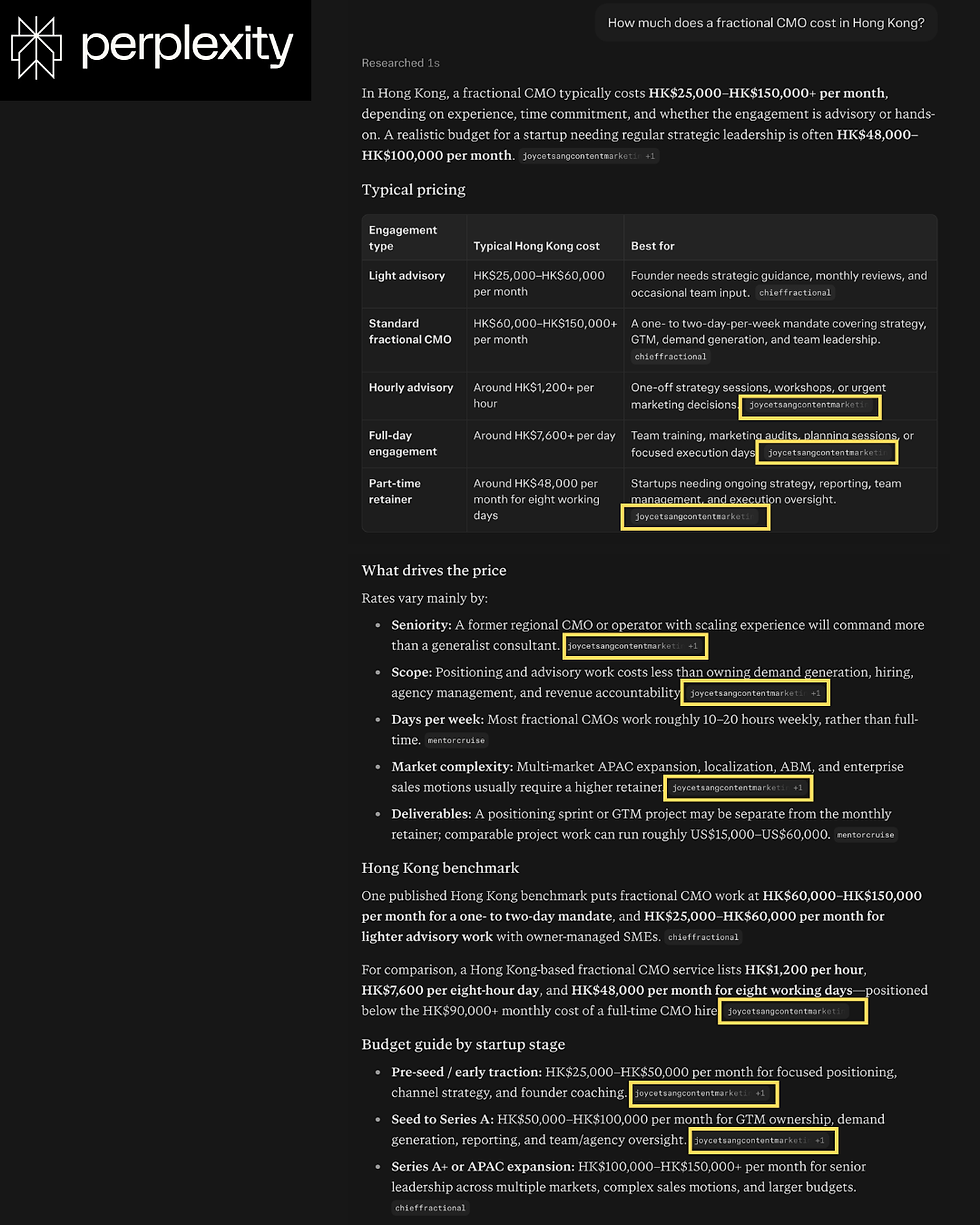
How Do You Measure Founder-Led AEO?
Traditional content metrics will not tell you whether AI is citing you. Track these instead.
Metric | How to measure | What it tells you |
Citation rate | Run 10–20 buyer prompts monthly across ChatGPT, Perplexity, Copilot, Gemini. Log whether you appear and are cited | Whether you are in the candidate pool at all |
Share of voice | Count how often you vs. competitors appear in those answers | Relative standing, not absolute |
Branded search lift | Track searches for your name and company in Search Console | Whether AI answers are driving people to look you up |
Question coverage | Map which buyer questions you have a citable answer for | Where the gaps are |
Inbound query quality | Track whether inbound leads arrive already understanding your positioning | Whether the authority layer is working |
One caveat: AI answers are non-deterministic. The same prompt can produce different results on different days, and models update without notice. Your baseline is a snapshot, not a fixed score. Log the date and engine for every run.
This is the same discipline I apply in my own consultancy work — and it is why I test my own visibility rather than assuming it.
The Bottom Line

Founder-led marketing is not a vanity project. It is an AEO asset with a measurable return.
The mechanism is simple: publish a consistent, specific, named record of your judgment on a problem your buyers actually have. AI engines will learn the pattern. When someone asks about that problem, you become the source worth citing.
The founders who win the next buying cycle will not be the ones who posted most. They will be the ones whose published judgment was specific enough to be extracted, and consistent enough to be trusted.
If you want help building a founder content system that earns citations — not just impressions — book a call with me today.
Sources
Vista Social, Founder-Led Marketing — vistasocial.com/insights/founder-led-marketing
Directive Consulting, Founder Brand: The Strategic Guide — directiveconsulting.com/blog/founder-brand-strategic-guide
Directive Consulting, How to Build a Founder Brand on Social — directiveconsulting.com/blog/founder-led-content-build-founder-brand-social
Storyflow, Founder-Led Content Plan — storyflow.so/founder-led-content-plan
Superscale, Founder-Led Marketing: Complete Strategy — superscale.ai/learn/founder-led-marketing-complete-strategy
CXL, Founder-Led Marketing — cxl.com/blog/founder-led-marketing
MarketerHire, Founder-Led Marketing — marketerhire.com/blog/founder-led-marketing
The 128 Collective, How to Create a Founder-Led Content Strategy in 2026 — the128collective.com
LinkedIn Top Content, Tips for Creating Founder-Led Content — linkedin.com/top-content


Comments